



The cannabis plant is a rich tapestry of compounds, each offering unique properties and potential benefits. While THC and CBD have long dominated the conversation, emerging research is shining a spotlight on lesser-known cannabinoids, unlocking new avenues for therapeutic exploration. Among these, tetrahydrocannabivarin (THCV) is rapidly gaining traction for its distinct effects on appetite and energy metabolism, positioning it as a compound of significant interest for both consumers and the scientific community in 2026. This article delves into the science, legal landscape, potential health applications, and market trends surrounding THCV, offering a comprehensive overview for those seeking to understand its place in the evolving cannabis and hemp industry.
Understanding THCV: Botany and Biochemistry
Tetrahydrocannabivarin (THCV) is a Phyto cannabinoid found in the *Cannabis sativa* plant, particularly in certain landrace strains originating from Africa and Asia. Botanically, THCV is structurally similar to THC but differs in its side chain, a crucial distinction that leads to its unique pharmacological profile. Unlike THC, which is known for its psychoactive effects and appetite-stimulating properties (often referred to as “the munchies”), THCV appears to have a biphasic effect. At lower doses, it may act as an antagonist to the CB1 receptor, potentially suppressing appetite. However, at higher doses, it can act as an agonist, similar to THC. This complex interaction with the endocannabinoid system (ECS) is a key area of ongoing scientific investigation.
The biosynthesis of THCV begins with cannabigerovarinic acid (CBGVA), which is then converted by enzymes into tetrahydrocannabivarin acid (THCVA). Through decarboxylation, THCVA transforms into the active THCV. This process can occur naturally with heat and light exposure or be induced through specific extraction and manufacturing methods. Understanding these botanical and biochemical pathways is crucial for developing consistent and potent THCV-infused products.
The Role of Terpenes in the THCV Experience
While cannabinoids like THCV are the primary actors, terpenes play a vital supporting role in modulating the overall effects of cannabis strains. Terpenes are aromatic compounds responsible for the distinctive scents of various cannabis varieties. They are also believed to interact synergistically with cannabinoids, a phenomenon known as the “entourage effect.” For THCV-rich strains, specific terpenes may enhance or temper its appetite-regulating and metabolic effects, contributing to a more nuanced user experience. Further research into terpene-cannabinoid synergy will be critical for crafting targeted THCV products in the coming years.
The 2026 Legal Status of THCV
Navigating the legal landscape of cannabis derivatives is a complex and ever-evolving challenge. As of early 2026, the legal status of THCV remains largely dependent on its source and tetrahydrocannabinol (THC) content.
THCV derived from hemp, defined by the 2018 Farm Bill as cannabis with less than 0.3% delta-9 THC on a dry weight basis, is generally considered legal at the federal level in the United States. This allows for the production and sale of hemp-derived THCV products nationwide, provided they adhere to state-specific regulations.
However, the legal standing of THCV can become complicated if it is extracted from marijuana plants, which are still classified as a Schedule I controlled substance federally. Many states have legalized marijuana for medical or recreational use, creating a patchwork of regulations. Products containing THCV derived from marijuana may only be legally available in states with comprehensive cannabis legalization frameworks.
Furthermore, regulatory bodies like the Food and Drug Administration (FDA) continue to scrutinize cannabis-derived products, including those containing THCV. While the FDA has approved CBD for specific therapeutic uses, its stance on THCV is still developing. Companies operating in this space must remain vigilant, adhering to evolving regulations concerning labeling, marketing, and product claims to ensure compliance and maintain consumer trust. The increasing demand for THCV may prompt further legislative clarification and regulatory action in 2026 and beyond.
Potential Health Benefits of THCV
The unique interaction of THCV with the endocannabinoid system suggests a range of potential health benefits, particularly in the areas of appetite regulation, metabolic health, and potentially neurological conditions.
Appetite Suppression and Weight Management
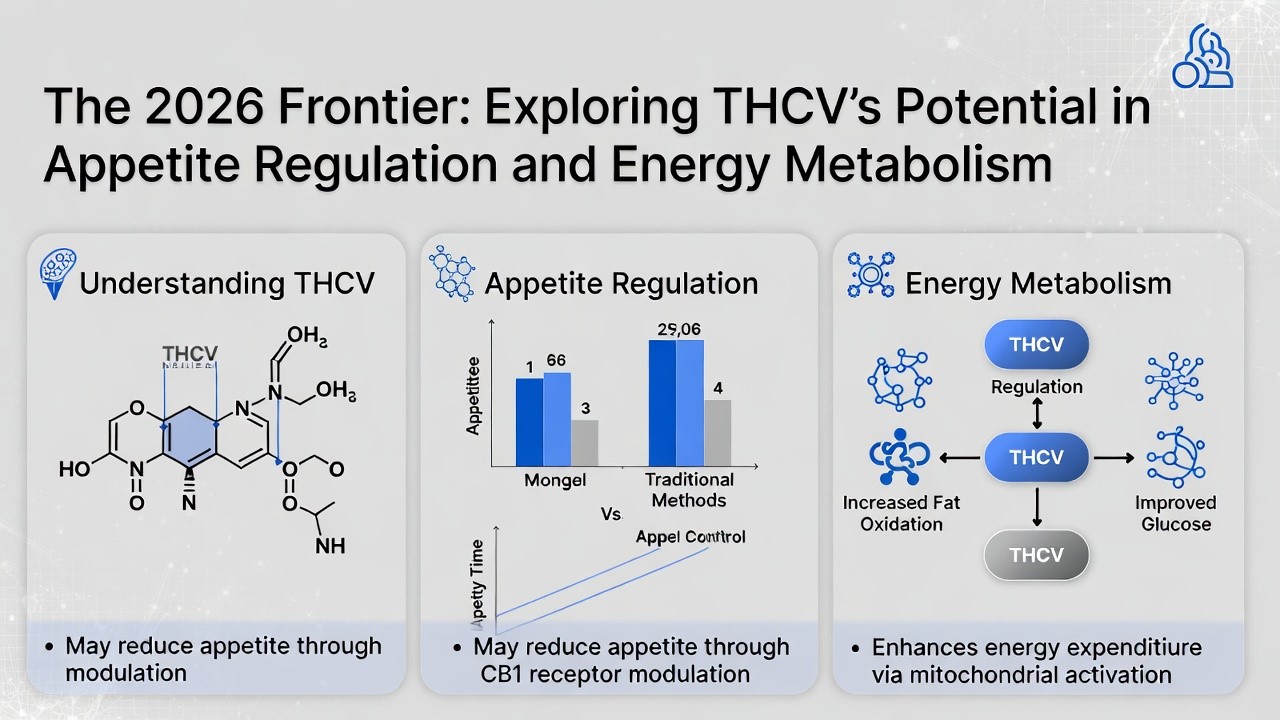
One of the most significant areas of interest for THCV is its potential role in weight management. Unlike THC, which is famously associated with increased appetite, THCV at lower doses appears to act as an appetite suppressant. Studies suggest that THCV can reduce food intake and promote feelings of satiety. This characteristic makes it a promising candidate for individuals seeking to manage their weight, control cravings, and support healthy eating habits. In 2026, research is likely to further explore THCV’s efficacy in clinical settings for obesity and related metabolic disorders.
Energy Metabolism and Diabetes Management
Beyond appetite control, THCV may also influence energy metabolism. Emerging research indicates that THCV could enhance mitochondrial function and increase energy expenditure. This metabolic boost, combined with its appetite-suppressing effects, positions THCV as a potential aid in managing conditions like type 2 diabetes and metabolic syndrome. By potentially improving insulin sensitivity and reducing blood glucose levels, THCV could offer a novel therapeutic avenue for individuals struggling with these widespread health issues.
Neurological Applications
While research is still in its early stages, THCV’s interaction with the CB1 receptor has also sparked interest in its potential neurological benefits. Some studies suggest that THCV may possess neuroprotective properties and could be beneficial in managing conditions such as Parkinson’s disease and Alzheimer’s disease. Its ability to potentially reduce tremors and improve motor control in preclinical models is particularly noteworthy. Further investigation is warranted to fully understand these complex neurological interactions.
Other Potential Benefits
Preliminary research also hints at other potential benefits of THCV, including:
Anti-inflammatory properties: Similar to other cannabinoids, THCV may exhibit anti-inflammatory effects.
Anxiolytic effects: While THC can sometimes induce anxiety, THCV might have anxiolytic properties, though more research is needed.
Bone health: Some studies suggest cannabinoids may play a role in bone health and healing.
Market Trends and Consumer Demand in 2026
The market for THCV is experiencing significant growth as consumer awareness and scientific understanding expand. In 2026, several key trends are shaping the demand and availability of THCV products.
Growing Consumer Interest
Consumers are increasingly seeking alternatives to traditional weight management solutions and are turning to natural compounds like THCV. The appeal lies in its perceived “natural” origin and its distinct effects compared to THC. This growing interest is driving demand for a wider variety of THCV-infused products.
Product Innovation
The cannabis and hemp industries are responding to this demand with innovative product formulations. We are seeing a rise in:
THCV tinctures and oils: Offering precise dosing and easy administration.
THCV edibles: Including gummies and capsules, providing a discreet and convenient option.
THCV vapes: Allowing for rapid absorption and quick onset of effects.
THCV-infused beverages: Catering to the growing market for functional drinks.
Blends with other cannabinoids: Formulations combining THCV with CBD, CBG, or even low doses of THC to create synergistic effects.
Companies are also exploring ways to enhance THCV bioavailability, potentially through nano-emulsification technologies, to ensure consumers receive the full benefits of the compound.
Focus on Sustainable and Regenerative Farming
As the industry matures, there is a growing emphasis on sustainable and regenerative farming practices for cannabis and hemp cultivation. Consumers are increasingly conscious of the environmental impact of product sourcing. Strains rich in THCV often require specific growing conditions, and producers focused on organic and eco-friendly methods are likely to gain a competitive edge. This aligns with broader consumer trends towards ethically sourced and environmentally responsible products.
The Role of Dispensaries and Retailers
Dispensaries and retailers play a crucial role in educating consumers about THCV and its potential benefits. Providing clear, accurate information about product composition, dosage, and effects is essential. As highlighted by the variety of smoking accessories available, such as those from Sahara Smoke, educating consumers on consumption methods and product types is key to a positive experience. For dispensaries like Main Smoke KC, offering a diverse range of THCV products and knowledgeable staff will be critical for success in this expanding market.
Key Takeaways
Unique Cannabinoid: THCV is a distinct cannabinoid with a unique chemical structure, differing from THC and CBD.
Biphasic Effects: It exhibits biphasic effects on appetite, potentially suppressing it at low doses and stimulating it at high doses.
Metabolic Potential: THCV shows promise for aiding weight management and improving energy metabolism.
Legal Ambiguity: Its legality is primarily tied to its hemp origin (less than 0.3% delta-9 THC), though state regulations vary.
Product Innovation: The market is seeing a surge in diverse THCV-infused products, from tinctures to beverages.
Growing Consumer Interest: Demand is increasing due to its unique wellness potential, particularly for appetite and metabolism.
Sustainable Sourcing: An increasing focus on sustainable and regenerative farming practices is influencing cultivation.
Frequently Asked Questions (FAQ)
What is THCV and how is it different from THC?
THCV (Tetrahydrocannabivarin) is a cannabinoid found in cannabis plants. While chemically similar to THC, it has a shorter side chain that leads to different effects. Unlike THC, which is known for its psychoactive properties and appetite stimulation, THCV may act as an appetite suppressant at lower doses and has shown potential in regulating energy metabolism.
Can THCV make you feel high?
At lower doses, THCV is generally not considered psychoactive and may even reduce the effects of THC. However, at higher doses, it can exhibit agonist activity at CB1 receptors, potentially leading to psychoactive effects similar to THC. The experience can vary greatly depending on the dose and individual sensitivity.
Is THCV legal in 2026?
The legality of THCV largely depends on its source. THCV derived from hemp (cannabis with less than 0.3% delta-9 THC by dry weight) is federally legal in the US under the 2018 Farm Bill. However, state laws may vary, and THCV derived from marijuana remains subject to state-specific marijuana regulations.
What are the main potential health benefits of THCV?
The primary potential benefits of THCV being explored include appetite suppression for weight management, improved energy metabolism, and potential benefits for individuals with type 2 diabetes. Early research also suggests neuroprotective properties, though more studies are needed.
How long does it take for THCV to work?
The onset of effects for THCV depends on the consumption method. When inhaled via vaping, effects can be felt within minutes. For edibles and tinctures, it may take 30 minutes to 2 hours to feel the effects, and they tend to last longer.
Are there any side effects associated with THCV?
While research is ongoing, potential side effects of THCV could include dry mouth, dizziness, and changes in appetite, particularly at higher doses. As with any cannabinoid, individual reactions can vary. It’s always recommended to start with a low dose and consult a healthcare professional.
Where can I find THCV products?
THCV products can be found at licensed dispensaries in states where cannabis is legal, as well as through online retailers that specialize in hemp-derived products. Ensure that products are third-party lab tested for purity and potency and comply with all relevant regulations.
Conclusion: Embracing the Future of Cannabinoid Innovation
As the cannabis and hemp industries continue to mature, THCV represents a compelling frontier in cannabinoid research and product development. Its unique ability to influence appetite and metabolism sets it apart from more commonly known cannabinoids, offering promising avenues for wellness and therapeutic applications in 2026 and beyond. From its intricate botanical origins to its complex interactions within the endocannabinoid system, THCV is a testament to the vast, untapped potential of the cannabis plant.
The evolving legal landscape, coupled with burgeoning consumer interest and sophisticated product innovation, positions THCV as a key player in the future of natural wellness solutions. As research progresses and regulatory clarity emerges, we can expect to see even more targeted and effective THCV-based products enter the market.
For consumers and industry professionals alike, staying informed about the science, legality, and market trends surrounding THCV is essential. Embracing this burgeoning cannabinoid responsibly and knowledgeably will pave the way for a more diverse, effective, and personalized approach to health and well-being. Explore the evolving world of cannabinoids and discover how compounds like THCV are shaping the future of the industry.